
We continue our blog series with a closer look at the AI Integration in Dynamics 365 and how it improves automation and efficiency across teams.
If you’ve been following our Dynamics CRM Never Stops Evolving series, you’ve seen how small updates to your system can unlock big efficiency gains. In our last post, we covered 10 Dynamics 365 CRM features that help teams move faster and work smarter.
Now, we’re focusing on what’s next. AI is enhancing the value of Dynamics 365 by helping users prioritize work, automate repetitive tasks, and make informed decisions without needing to switch tools. These updates are built into the platform, but they only work if your systems, data, and processes are ready for them.
What’s Driving the AI Push
You’ve seen the headlines about generative AI and the growing push to integrate it into enterprise tools. But before you rush to adopt the latest capabilities, take a step back.
Much of the content out there about AI has been informative. However, lately, most of it leans heavily on persuasion, urging businesses to adopt AI tools immediately. Vendors have rushed to launch features and dominate the space, flooding the market before many systems are ready.
Laying the Groundwork for AI Success
MS Dynamics 365 AI works best when built on a stable foundation. That’s why it’s important to make sure your infrastructure, data standards, and user processes can support it, and why AI adoption should be part of your roadmap, not a bolt-on.
In this article, we’ll explore the latest Dynamics 365 AI features, including Copilot. We will also review how to adopt new capabilities effectively and the importance of focusing on enhancing your system’s maturity in specific areas to support these implementations. Here are the modules we’ll cover:
Dynamics 365 Customer Insights
Dynamics 365 Project Operations
Dynamics 365 Supply Chain Management
Unleashing the Power of Microsoft Dynamics 365 AI Features
Dynamics 365 is a suite of intelligent cloud-based business applications designed to support a wide range of functions, including customer-facing CRM and back-end ERP operations.
What makes Dynamics truly powerful is its foundation on the Microsoft Dataverse, which enables seamless integration across the Microsoft ecosystem and allows your data to move freely across systems.
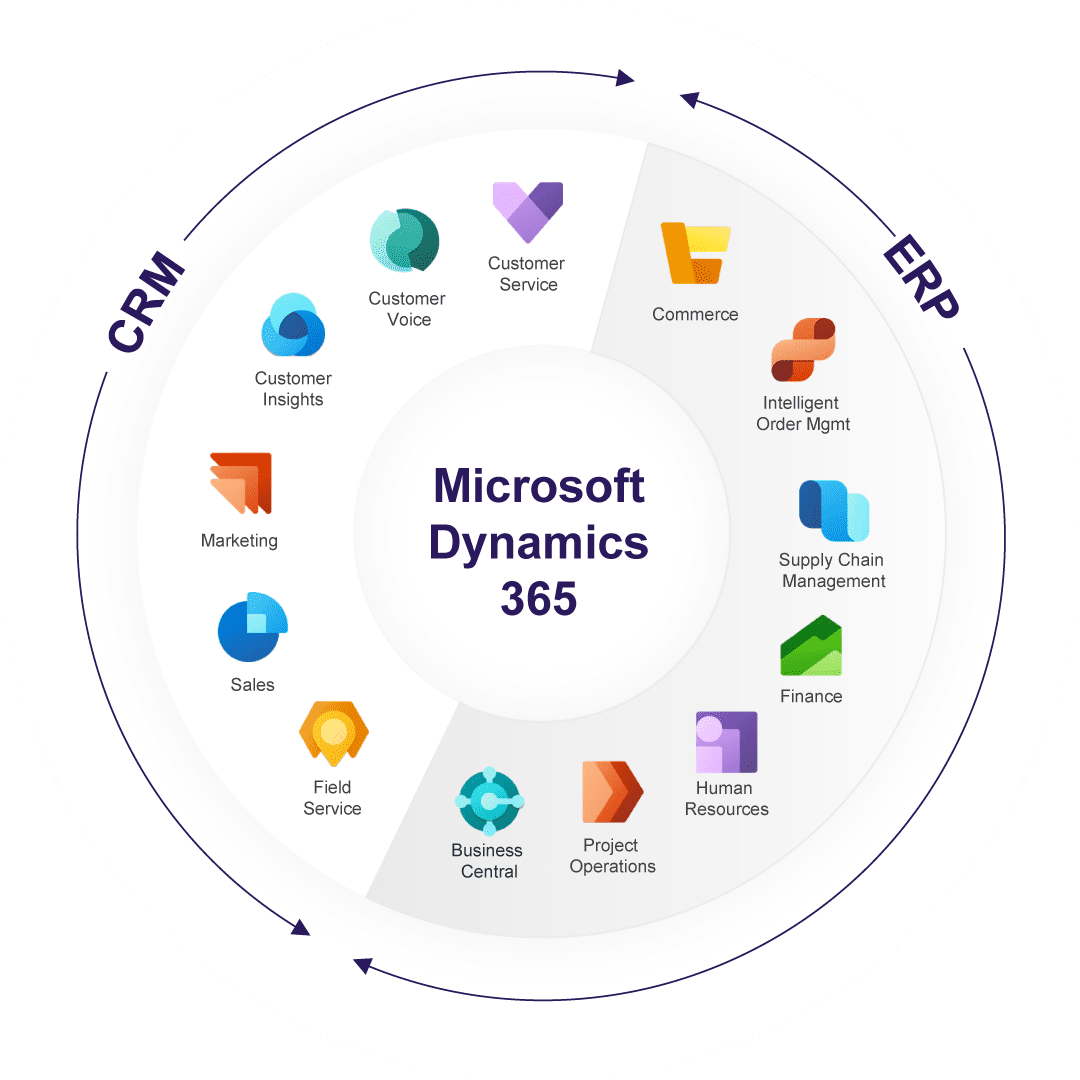
We won’t cover the foundational features of each Dynamics 365 app here. Instead, we’ll highlight the AI features built into each Dynamics 365 application and how they can improve automation, productivity, and decision-making. If you’ve already completed a CRM assessment, these updates can help you get even more out of your system.
Microsoft has recently doubled down on AI investments across the platform. Below, we’ve organized the most relevant updates by product.
Microsoft Dynamics 365 Sales
Relationship Analytics
Tracks communication patterns and engagement history to reveal relationship strength, identify at-risk accounts, and guide next steps.
Who Knows Whom
Identifies internal connections to prospects by analyzing meeting data and email history, helping reps warm up outreach faster.
Predictive Lead Scoring
Rank leads by conversion likelihood, helping sales teams focus on the most promising opportunities.
Cross-Sell/Up-Sell and Product Recommendations
Suggests complementary products based on customer behavior to increase average deal size.
Sales Insights
Provides in-context prompts and summary cards, tracks engagement on emails and meetings, and highlights next best actions to guide sellers through the pipeline.
Demand Forecasting
Applies AI to historical trends and pipeline data to project revenue with more accuracy and confidence.
Conversation Intelligence
Analyzes sales calls in real time to detect sentiment and intent, summarize key points, and tag follow-ups directly to customer records.
Dynamics 365 Sales Copilot (formerly Viva Sales)
Sales Copilot drafts personalized emails, summarizes Teams meetings in Outlook, and recommends next steps during calls using real-time data and competitor insights. It also automates responses with suggested meeting times pulled from your Outlook calendar.
Dynamics 365 Field Service
Resource Scheduling Optimization
Matches the right people, tools, and locations to each job by automatically scheduling based on skills, availability, and capacity.
Predictive Work Duration
Uses past performance data to estimate how long jobs will take based on the technician, customer history, and type of service.
Predictive and Preventative Maintenance
Uses IoT sensors and AI to predict equipment failure and schedule maintenance before problems impact operations.
Dynamics 365 Customer Service
Conversational Analytics to Identify Trends and Issues in Cases
Analyzes support conversations to spot trends, recurring issues, and opportunities to improve service across cases and channels.
D365 Customer Service Copilot
Customer Service Copilot helps agents find answers faster by searching internal docs, previous cases, and trusted web sources. It also drafts emails, chat responses, and conversation summaries, and powers AI chatbots through Power Virtual Agents to support self-service.
Real-Time Insights
Delivers real-time recommendations during active cases, including customer sentiment and suggested knowledge articles to improve resolution speed.
Intelligent Routing
Automatically assigns cases to the most qualified agent based on workload, skillset, urgency, and customer sentiment.
Biometric Authentication
Uses voice and behavior-based recognition to verify identities quickly and reduce friction during support interactions.
Dynamics 365 Customer Insights (Formerly D365 Marketing, which will combine with Customer Insights into a single solution)
AI-Powered Customer Journey Orchestration
Schedules messages based on the best send time for each contact, using AI to improve email open rates across campaigns.
AI-Powered Customer Segmentation With D365 Customer Insights Copilot
Let’s teams build or refine customer segments using natural language prompts, powered by AI query assist.
Content Generation With D365 Customer Insights Copilot
Generates email content ideas using AI, helping marketers save time and accelerate campaign creation
Spam Checker
Evaluates email content for spam risk and provides a score to help avoid deliverability issues.
Automated Scheduler
Automatically sends emails at the optimal time for each contact to improve engagement throughout the journey.
Dynamics 365 Customer Insights (now combined with D365 Marketing as a single offering)
Generate Suggested Segments
Uses AI to recommend new customer segments based on behaviors, preferences, and custom attributes.
Get Insights on Segments With D365 Customer Insights Copilot
Compares customer segments and uncovers key differences or overlaps, using Copilot to answer questions in plain language.
Find Similar Customers
Identifies customers with similar attributes or behaviors to help you target lookalike audiences.
Predict Customer Lifetime Value
Forecasts the long-term revenue potential of individual customers based on behavior and purchase patterns.
Predict Product Recommendations
Recommends products based on customer purchase history and similarities to others in your audience.
Predict Subscription Churn
Flags subscribers likely to cancel, giving teams a chance to engage and retain them.
Predict Transactions Churn
Transactional churn prediction helps predict if a customer will no longer purchase your products or services in a given time window.
Audience Segmentation With Copilot
Builds audience segments using natural language inputs, making targeting more intuitive and efficient.
Dynamics 365 Finance
Fraud Protection
Detects and prevents fraud by analyzing transaction data for unusual patterns using AI-driven insights.
Business Performance Analytics
Uses AI to monitor financial performance, uncover cash flow risks, and surface insights into revenue and expenses.
Collections Management With D365 Finance Copilot
D365 Finance Copilot helps teams manage collections with AI-powered reminders, payment tracking, and fast access to overdue accounts and historical data.
Dynamics 365 Project Operations
Project Planning With D365 Project Operations Copilot
Prompt Copilot using natural language to automatically generate project plans based on requirements, helping teams kick off faster with built-in structure and timelines.
Status Reporting With D365 Project Operations Copilot
Generate project status reports using plain language prompts. Copilot flags potential risks and suggests mitigation strategies to keep work on track.
Automated Receipt Capture With OCR
Speed up expense submissions by scanning receipts with OCR, extracting key details like vendor, amount, and date without manual entry.
Dynamics 365 Supply Chain Management
AI-Driven Inventory Optimization
Optimize inventory with AI by analyzing historical data and demand forecasts to improve accuracy, reduce overstock, and cut waste.
Predictive Maintenance With Sensor Data Intelligence
Uses real-time equipment data to detect anomalies and schedule maintenance before breakdowns occur, reducing downtime and repair costs.
Dynamics 365 Business Central
Brand Descriptions With D365 Business Central Copilot
Creates marketing copy tailored to your brand.
Sales and Inventory Forecasting (Extension)
Predicts future demand using historical data and uses this insight to accurately forecast necessary inventory to avoid stockouts and create replenishment requests to your vendors.
Late Payment Predictions (Extension)
Uses AI to predict if sales invoices will be paid on time, enabling you to optimize your collections process and minimize outstanding receivables.
Cash Flow Analysis
Provides predictions for your future cash flow based on historical data with Azure AI.
Now that we’ve looked at the new features AI will enable, let’s take a closer look at Copilot, specifically.
How Microsoft Copilot Powers Smarter AI Workflows
Built into Microsoft Dynamics 365, Microsoft 365, and the Power Platform, Microsoft Copilot is an AI-powered assistant that helps teams automate tasks, generate content, and make informed decisions directly inside the apps they already use.
Because Dynamics 365 runs on the Dataverse, Copilot can surface context-aware insights from across your connected business systems. Whether you’re creating email follow-ups in Sales, generating a project plan in Project Operations, or analyzing collections in Finance, Copilot uses your data to help you move faster and stay focused.
Copilot leverages Microsoft Graph, Bing, and Azure Cognitive Search to provide suggestions, summaries, and answers directly within your workflow. It’s also built with compliance in mind—customer data is not used to train the models, and all content cites trusted sources. Learn more about how Copilot delivers enterprise-ready AI built for security and privacy.
Dynamics 365 Copilot also offers role-specific functionality, designed to support domain-specific tasks using real-time context and data from across your Dataverse. Each Copilot feature in this article is labeled accordingly.
Copilot is designed to be secure, transparent, and trustworthy. It accesses your data securely, does not use customer data to train models, and cites public sources so users can verify the origin of AI-generated responses.
What Your System Needs Before Adding AI to Dynamics 365
To get the most value from Dynamics 365 AI capabilities, your system needs a solid foundation: people, processes, and high-quality data.
While AI can drive significant productivity improvements, it’s only as effective as the information and structure behind it. Without consistent processes and clean, standardized data, even the most powerful tools can lead to inefficiencies or limited results.
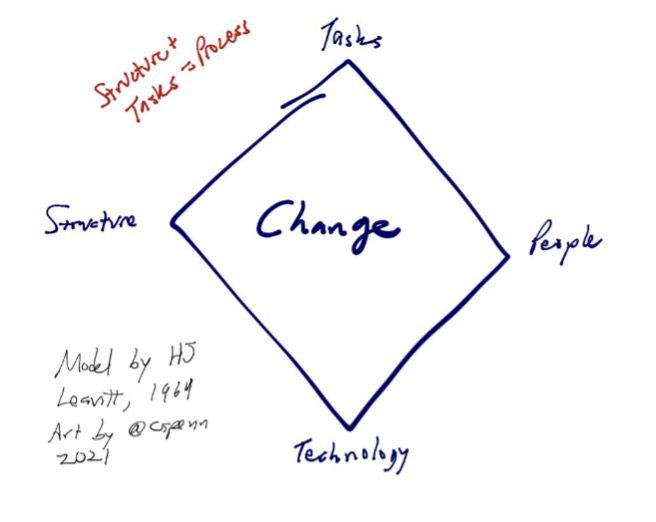
Transforming People, Process and Technology – Christopher S. Penn – Marketing Data Science Keynote Speaker (christopherspenn.com)
Preparing Your System for Dynamics 365 AI Features
The AI features in Dynamics 365 are designed to streamline processes by providing real-time recommendations, generating content, and surfacing insights when and where they’re needed. But to get accurate, relevant results, your system needs to be ready in three key areas:
- Cloud Infrastructure
-
- All Dynamics 365 AI features require cloud-based deployments. If you’re still using on-premise systems, migrating to the cloud is the first step.
-
- Data Quality and Process Standardization
-
- Reliable AI depends on accurate, structured data. Standardizing how your teams collect and manage information ensures that insights are based on complete, consistent inputs..
-
- System Integration
-
- When your applications and data are integrated, Dynamics 365 can deliver insights across the entire business. A connected environment enables automation and better decision-making at every level.
-
What’s Next for AI in Dynamics 365
We are excited about the future of Dynamics 365 and AI. These tools are already improving how businesses automate, collaborate, and make decisions. The pace of innovation is accelerating, and there’s more to come.
Are you ready to soar to new heights with Microsoft Copilot? In this on-demand webinar, our Microsoft AI experts will help you learn how to assess and level up your readiness for using the powerful AI tools that Copilot provides.